
What You'll Learn In This Guide
- The state of the remote job market in 2026 and why it's more competitive than ever
- How to audit your resume for the "Remote-First" mindset
- The 7 essential remote skills you MUST highlight (that you're probably missing)
- Optimizing your resume header for location independence
- Tools and technologies that prove you're ready for Day 1
- How to bridge the "Trust Gap" with specific resume strategies
The year is 2026, and the "Remote vs. In-Office" debate has largely settled into a sophisticated global equilibrium. Remote work is no longer a perk or a pandemic necessity—it is a specialized career track with its own economy, culture, and, most importantly, its own hiring standards.
Specifically, the bar has been raised. In 2020, saying "I have Zoom installed" was enough. In 2026, companies are looking for "async-native" professionals who can navigate complex digital ecosystems, manage their own cognitive load, and collaborate across four time zones without ever needing a synchronous meeting.
This shift means your old resume—the one that lists "proficient in Microsoft Office"—is woefully outdated. To land a high-paying remote role today, specifically one that competes on the global stage (and pays in strong currencies), your resume needs to signal not just competence, but remote fluency.
1. The "Remote-First" Mindset Shift
Before we touch the formatting, we need to address the psychology of the remote recruiter. When a hiring manager looks at a candidate for an on-site role, they subconsciously think: "Can I supervise this person? Will they fit in the room?"
When they hire remotely, the fear is different. They think: "Will this person disappear? Will I have to chase them? Can they solve problems when I'm asleep?"
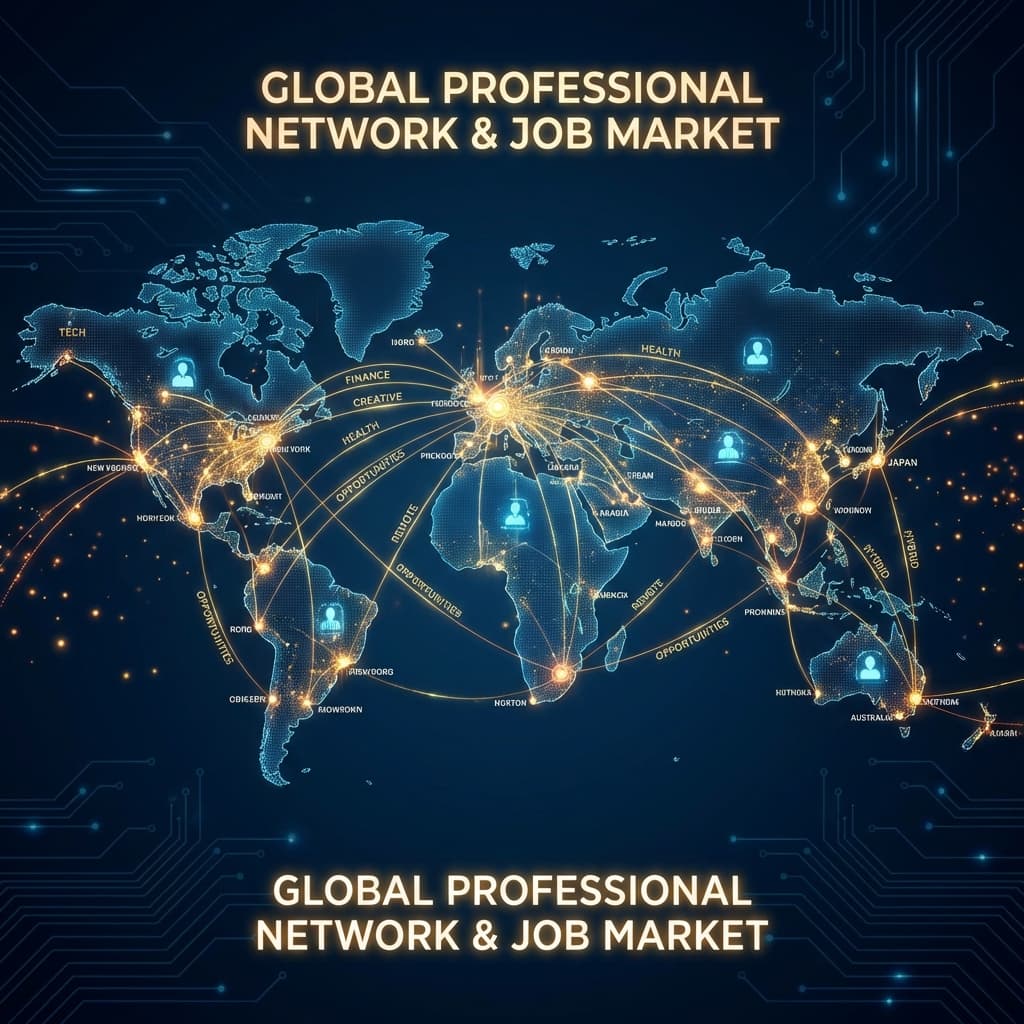
The 2026 Job Market is Global: Your competition is no longer just local.
Your resume must answer these anxieties before they represent them. This is what we call the Trust Gap. Your document isn't just a list of skills; it's a trust-building instrument.
To bridge this gap, every bullet point needs to be filtered through the lens of autonomy. You didn't just "manage a project"; you "orchestrated a cross-functional product launch across 3 time zones using Jira and Loom updates, reducing meeting time by 40%." See the difference? One is a task; the other is a demonstration of remote capability.
2. Optimizing the Header: Location & Logistics
In 2026, "Location" is a tricky field. Do you list your city? Your time zone? "Remote"?
The "Digital Nomad" Dilemma
If you are truly location-independent, listing "Remote" or "Global" can sometimes backfire with traditional HR systems that filter by radius. However, modern ATS (Applicant Tracking Systems) have evolved.
- Best Practice: List your tax residence city and country, followed by "Remote" or your Time Zone.
Example: "Austin, TX (UTC-6) | Open to Remote Worldwide" - The Connection Check: Always include a link to your digital presence—LinkedIn is mandatory, but a personal portfolio or GitHub is the new standard for verifying you exist and are professionally active online.
3. The 7 Essential Remote Skills (Visualized)
Technical skills get you the interview; remote skills get you the job. In 2026, "Communication" is too vague. We are talking about Digital Empathy and Asynchronous Efficacy.
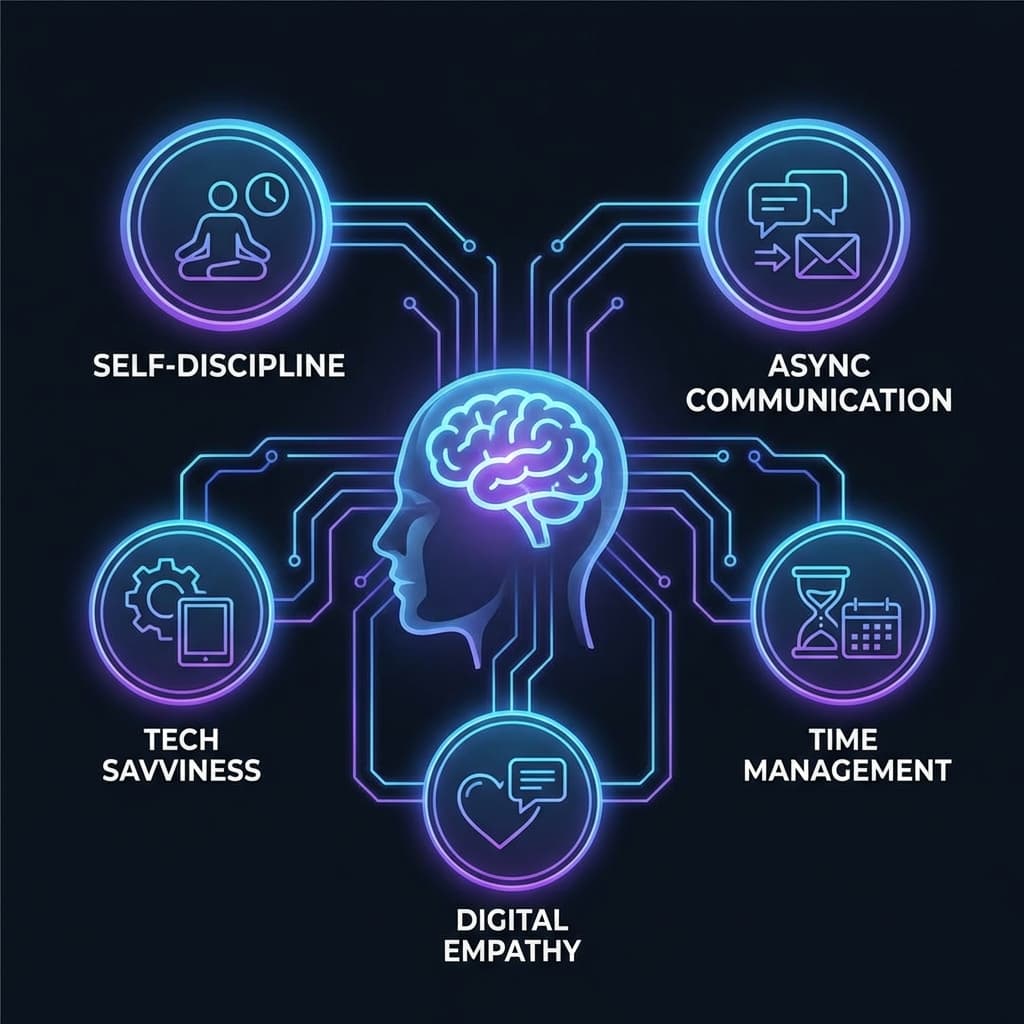
The Skillset Breakdown
1Asynchronous Communication
The ability to write clear, actionable documentation that colleagues can read and act on hours later. Resume Keyword: "Documentation-first culture," "Handbook management," "Async updates."
2Digital Empathy
Sensing tone in text, resolving conflict without voice, and building rapport over Slack. Resume Keyword: "Cross-cultural collaboration," "Team cohesion initiatives."
3Self-Management
The absolute specific ability to prioritize work without a manager tapping your shoulder. Resume Keyword: "Ownership," "End-to-end delivery," "Autonomous workflow."
4Output Focus
Shifting from "hours worked" to "results delivered." Resume Keyword: "KPI-driven," "Deliverable-focused," "Impact metrics."
4. The Tech Stack: Proving You're "Day 1 Ready"
In an office, you can ask IT to fix your printer. Remotely, you are your own IT department. Your resume needs to subtly scream: "I can troubleshoot my own VPN."
Furthermore, proficiency in the Remote Stack is non-negotiable. It's not enough to list these tools; you must describe HOW you effectively utilize them to drive business value.

The Must-Have Tools for 2026
| Category | Standard Tools | Resume Power Phrase |
|---|---|---|
| Async Comms | Slack, Microsoft Teams, Twist | "Managed 50+ channels ensuring zero-inbox culture" |
| Project Mgmt | Jira, Linear, Asana, Monday | "Architected sprint workflows in Linear" |
| Documentation | Notion, Confluence, Obsidian | "Created central knowledge base reducing onboarding time" |
| Video/Visual | Zoom, Loom, Miro, Figma | "Facilitated virtual workshops via Miro" |
5. Rewriting Experience for Remote Impact
This is where 90% of candidates fail. They copy-paste their office duties. To win, you must transform your bullets to highlight autonomy and distributed impact.
❌ The "Office" Bullet:
"Hosted weekly team meetings to discuss project status and assign tasks."
✅ The "Remote" Upgrade:
"Transitioned team from synchronous status meetings to async Loom updates, saving 5 hours of collective productivity weekly while maintaining 100% project delivery rate."
Notice the difference? The second one proves you respect time, understand tools, and value output over presence.
The "Result-First" Formula
For every job role, ask yourself: How did I build trust without being seen?
- Did you onboard new hires remotely?
- Did you coordinate a launch while your boss was asleep?
- Did you write a handbook that stopped people from asking you repetitive questions?
These are gold. They belong in the top third of your resume.
6. The Cover Letter: Your Async Audition
In remote hiring, the cover letter is more than a formality; it is a writing sample. Since 80% of remote communication is text-based (Slack, Email, Docs), your cover letter proves you can write clearly, concisely, and with a tone that fits the company culture.
Do not summarize your resume. Instead, tell a story of a "remote problem" you solved.
"In my last role, I noticed our team in London was blocked for 4 hours every morning waiting for the NY team to wake up. I implemented a 'handoff protocol' using Notion templates that eliminated this lag and increased shipping velocity by 15%."
This short paragraph does more than a page of "I am a hardworking individual." It proves you get it.
Conclusion: Your Ticket to Freedom
The remote job market in 2026 is global, high-stakes, and incredibly rewarding. It grants you the freedom to design your life, but the price of entry is excellence in self-presentation.
By optimizing your resume for trust, autonomy, and digital fluency, you are doing more than applying for a job; you are signaling that you belong to the future of work. You are telling the hiring manager: "You can trust me with the keys to your company, even if we never shake hands."
Now, go build that resume. The world is waiting.
Ready to Build Your Remote-First Resume?
Don't start from scratch. Use our ATS-friendly templates designed specifically for the modern digital economy.