How to Write a Resume with No Experience (Entry-Level Guide)
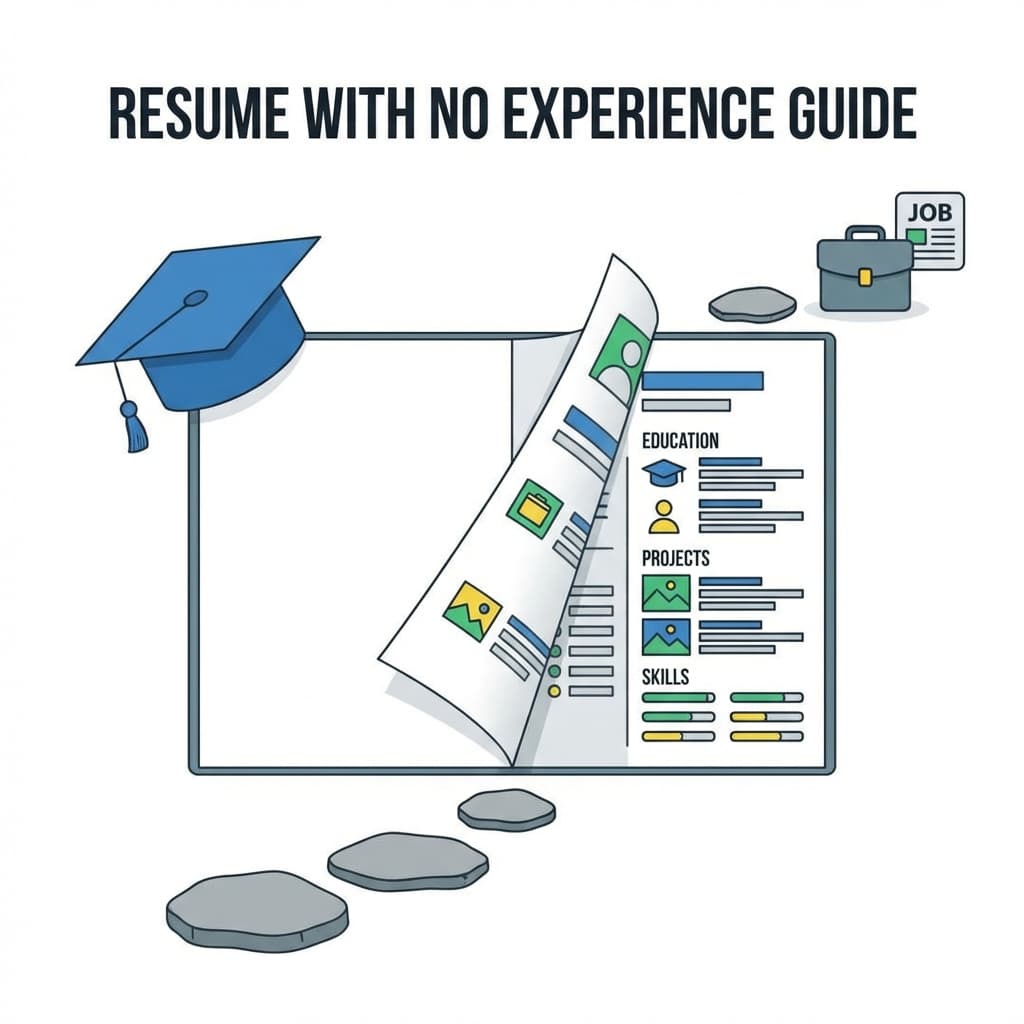
"How can I write a resume when I have no experience?" This is the catch-22 every recent graduate and career starter faces. You need experience to get a job, but you need a job to get experience. Here's the truth: you have more to offer than you think. This comprehensive guide will show you how to create a compelling resume that highlights your education, projects, skills, and potential—even without traditional work experience.
The Good News
Employers hiring for entry-level positions EXPECT limited work experience. They're looking for potential, willingness to learn, relevant skills, and cultural fit. Your resume just needs to demonstrate these qualities effectively.
What to Include When You Have No Experience
Your resume should include these sections, in this order:
- Contact Information - Name, phone, email, LinkedIn, location
- Professional Summary or Objective - 2-3 sentences about your goals and value
- Education - Your strongest asset, list it prominently
- Relevant Projects - Academic, personal, or volunteer projects
- Skills - Technical and soft skills you've developed
- Experience - Internships, part-time jobs, volunteer work
- Activities & Leadership - Clubs, sports, volunteer roles
- Certifications & Awards - Any relevant credentials or recognition
Section 1: Education (Your Strongest Asset)
When you lack work experience, education becomes your primary credential. Make it count.
What to Include in Education Section
- • Degree and Major: Bachelor of Science in Computer Science
- • University Name and Location: University of California, Berkeley
- • Graduation Date: Expected May 2026 (or actual date)
- • GPA: Include if 3.5 or higher (3.7/4.0)
- • Relevant Coursework: List 4-6 courses related to target job
- • Academic Honors: Dean's List, Cum Laude, scholarships
- • Thesis/Capstone: Brief description if impressive
Example Education Section:
Bachelor of Science in Computer Science
University of California, Berkeley | Expected May 2026 | GPA: 3.8/4.0
Relevant Coursework: Data Structures, Algorithms, Machine Learning, Database Systems, Web Development, Software Engineering
Honors: Dean's List (4 semesters), Merit Scholarship Recipient
Senior Capstone: Developed AI-powered study assistant app using Python and TensorFlow, achieving 85% user satisfaction in beta testing with 200+ students
Section 2: Projects (Prove Your Skills)
Projects are your secret weapon. They demonstrate practical skills, initiative, and problem-solving ability.
Types of Projects to Include
Academic Projects
- Class assignments (if substantial)
- Group projects
- Research projects
- Capstone/thesis work
Personal Projects
- Side projects and apps
- Open source contributions
- Portfolio website
- Freelance work
Volunteer Projects
- Nonprofit website development
- Community initiatives
- Hackathon projects
- Pro bono consulting
Competition Projects
- Hackathons
- Case competitions
- Design challenges
- Coding competitions
How to Write Project Descriptions
Project Description Formula:
[Action Verb] + [What you built/did] + [Technologies used] + [Impact/Result]
E-Commerce Website | Personal Project | Jan - Mar 2026
- Developed full-stack e-commerce platform using React, Node.js, and MongoDB with payment integration via Stripe
- Implemented user authentication, shopping cart functionality, and admin dashboard for inventory management
- Deployed on AWS with CI/CD pipeline, achieving 99.9% uptime and sub-2-second page load times
- Gained 50+ active users in first month through social media marketing
Section 3: Skills (Show What You Can Do)
List both technical (hard) skills and interpersonal (soft) skills. Be honest—only include skills you can demonstrate.
Example Skills Section for Entry-Level:
Technical Skills:
Python, JavaScript, HTML/CSS, React, SQL, Git, Microsoft Office Suite, Google Analytics
Soft Skills:
Problem-Solving, Team Collaboration, Written Communication, Time Management, Adaptability
Section 4: Experience (Yes, You Have Some!)
Even without formal employment, you likely have relevant experience. Include:
- • Internships: Even unpaid or short-term
- • Part-time jobs: Retail, food service, tutoring—all count
- • Volunteer work: Treat it like a job with responsibilities and achievements
- • Freelance work: Any paid projects, even small ones
- • Leadership roles: Club president, team captain, event organizer
Example: Turning Part-Time Work into Relevant Experience
❌ Weak:
"Barista at Starbucks - Made coffee and served customers"
✓ Strong:
Barista | Starbucks | Sept 2024 - Present
- Delivered exceptional customer service to 100+ customers daily, maintaining 4.8/5 satisfaction rating
- Trained 5 new team members on POS system and beverage preparation procedures
- Managed inventory and placed orders, reducing waste by 15% through improved forecasting
- Resolved customer complaints professionally, achieving 95% positive resolution rate
Professional Summary vs. Objective Statement
For entry-level candidates, both can work. Choose based on what you have to offer:
Use Objective If:
- • You're a complete beginner
- • You're changing careers
- • You have very limited experience
"Recent Computer Science graduate seeking entry-level software development role to apply programming skills and contribute to innovative projects while continuing to learn and grow."
Use Summary If:
- • You have internships or projects
- • You have relevant skills to highlight
- • You want to emphasize value over need
"Computer Science graduate with hands-on experience in full-stack development through 2 internships and 5+ personal projects. Proficient in React, Python, and SQL. Passionate about building user-friendly applications."
What NOT to Include (Common Mistakes)
❌ High School Information (if you have a college degree)
❌ Irrelevant hobbies ("I enjoy watching Netflix")
❌ "References available upon request" (assumed)
❌ Generic objective ("Seeking a challenging position...")
❌ Unprofessional email address
Entry-Level Resume Template Structure
Your Name
Phone | Email | LinkedIn | Portfolio (if applicable)
PROFESSIONAL SUMMARY / OBJECTIVE
2-3 sentences highlighting education, skills, and career goals
EDUCATION
Degree, University, GPA, Honors, Relevant Coursework
PROJECTS
3-4 impressive projects with descriptions and impact
SKILLS
Technical Skills | Soft Skills
EXPERIENCE
Internships, Part-time jobs, Volunteer work
ACTIVITIES & LEADERSHIP
Clubs, Organizations, Volunteer roles
Tips for Standing Out Without Experience
- Quantify everything: Use numbers even for small achievements (tutored 10 students, organized event for 50 people)
- Tailor to each job: Customize your resume for every application
- Use action verbs: Developed, Created, Led, Organized, Implemented
- Show enthusiasm: Passion and willingness to learn matter for entry-level roles
- Keep it to 1 page: No exceptions for entry-level candidates
- Proofread obsessively: Typos are especially damaging when you lack experience
- Include a portfolio link: If relevant, showcase your work online
Build Your First Resume with Banana Resume
Banana Resume's entry-level templates are designed specifically for recent graduates and career starters. Highlight your education, projects, and potential with professional formatting that gets past ATS systems.
Create Your Entry-Level ResumeConclusion
Lack of traditional work experience isn't a dealbreaker—it's just a different starting point. By strategically highlighting your education, projects, skills, and any experience you do have, you can create a compelling resume that opens doors.
Remember: employers hiring entry-level candidates expect limited experience. What they're really evaluating is your potential, your skills, your work ethic, and your ability to learn. Show them you have these qualities, and you'll land that first opportunity.
Focus on what you CAN do, not what you haven't done yet. Your resume is just the first step—once you get that interview, your enthusiasm and potential will seal the deal.