The Rise of Skills-Based Hiring: How to Showcase Your Competencies Instead of Degrees in 2026
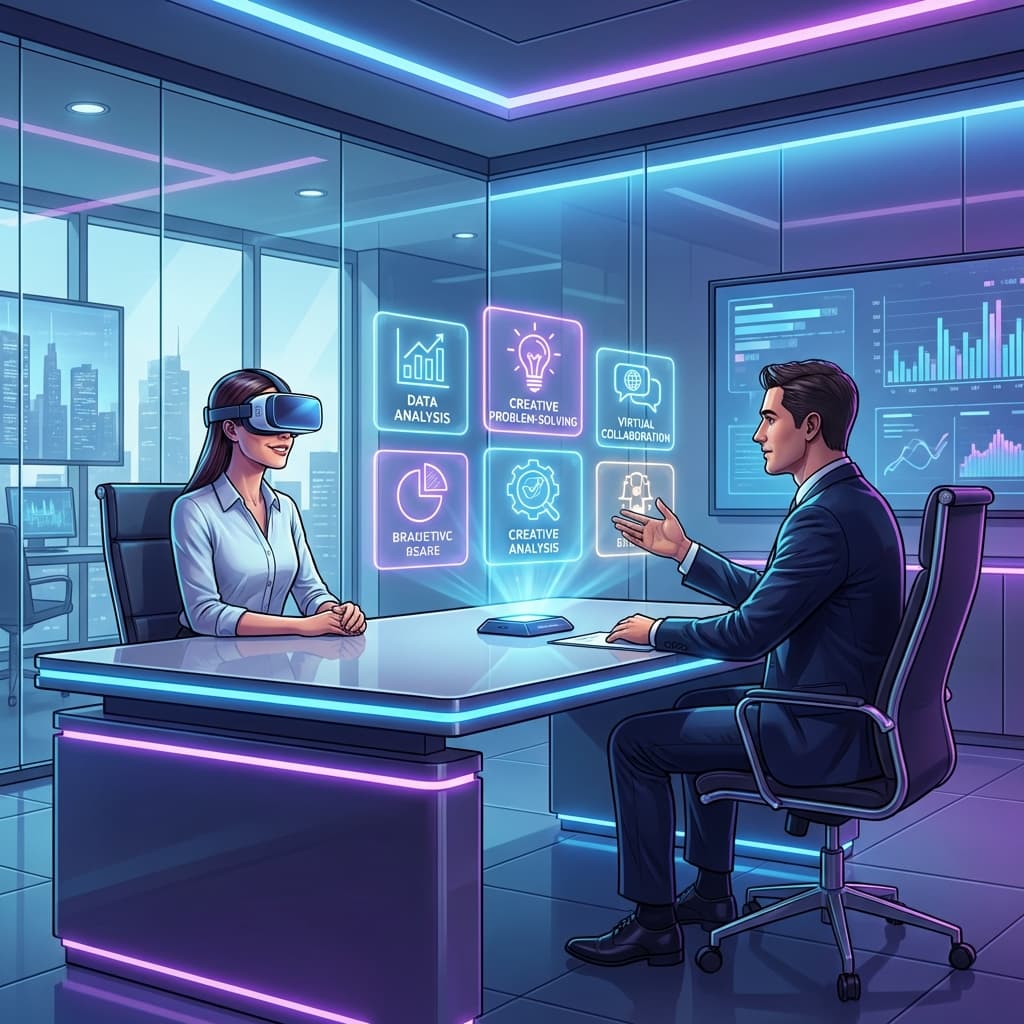
For decades, the Bachelor's degree was the "Golden Ticket." It was the gatekeeper, the baseline, the non-negotiable filter. If you didn't have the parchment, you didn't get the interview. But in 2026, the walls of the "Paper Ceiling" are crumbling. A tectonic shift has occurred in the recruitment landscape: effective immediately, what you can do matters infinitely more than where you learned to do it.
This isn't just a trend; it's a structural revolution. Major corporations like Google, IBM, Delta Airlines, and thousands of others have stripped degree requirements from 80% of their job listings in favor of Skills-Based Hiring. But this shift brings a new challenge: if the degree is no longer the shorthand for competence, how do you prove you are qualified? The answer lies in mastering the art of the Competency-First Resume.
In this comprehensive guide, we will dismantle the old rules of credentialism and equip you with the advanced strategies needed to thrive in the 2026 skills economy. Whether you are a self-taught coder, a career switcher, or a degree-holder appearing "over-qualified," this is your roadmap to the new world of work.
By the Numbers: The 2026 Landscape
76% of global employers utilize skills-based assessment methods to reduce mis-hires.
The "Degree Gap" has closed: Candidates without degrees are now hired at near-parity rates for roles in Tech, Sales, and Operations.
Skills Half-Life: The value of a learned skill effectively halves every 2.5 years due to rapid AI advancement, making continuous adaptability the #1 most sought-after trait.
Table of Contents
- 1. The Death of the "Paper Ceiling"
- 2. Defining "Skills" in 2026
- 3. The Taxonomy of Competence
- 4. Structuring a Skills-First Resume
- 5. Evidence-Based Application Strategies
- 6. The Role of Micro-Credentials
- 7. Interviewing: The "Show vs. Tell" Shift
- 8. Future-Proofing Your Career
Chapter 1: The Death of the "Paper Ceiling"
Why has the market turned against the degree? For nearly a century, a University degree was a proxy. It signaled "conscientiousness," "ability to learn," and "persistence." But in the fast-paced, high-tech economy of the 2020s, that proxy broke.
Employers found that a Computer Science degree from 2018 didn't guarantee a candidate knew how to prompt-engineer an LLM in 2026. They found that marketing graduates didn't understand algorithmic social targeting. The degree was static; the work was dynamic.
The Old Model (Credentialism)
Requires: 4-Year Degree, Ivy League status, Specific majors.
Assumed that where you learned mattered more than what you knew. Automatically filtered out 60% of the workforce. Created diverse-hiring bottlenecks.
The New Model (Competency)
Requires: Portfolios, Certifications, Assessments, Validated Projects.
Assumes that if you can do the job today, nothing else matters. Democratizes access to high-paying roles for self-learners and career switchers.
Warning: This does not mean education is dead. It means education is decoupled from institutions. You must still be highly educated, just not necessarily university-credentialed.
Chapter 2: Defining "Skills" in 2026
When we say "Skills," we aren't just talking about Python or Excel. In 2026, the definition has expanded into three distinct categories. Your resume needs to hit all three.
1. Durable Skills (The New "Soft Skills")
Formerly called "soft skills," these are now termed "Durable Skills" because they outlast technological cycles. As AI automates coding and writing, these human-centric abilities skyrocket in value.
- Critical Thinking: The ability to vet AI outputs for hallucination and bias.
- Adaptive Leadership: Managing remote, hybrid, and synthetic (AI) teams.
- Communication: Translating complex machine logic into human strategy.
2. Perishable Skills (The "Hard Skills")
These are technical abilities with a shelf life. React.js, Rust, SEO, Google Ads. They are vital for getting hired now but will require updating every 18 months.
3. Hybrid Skills (The "Power User" Skills)
The intersection of domain expertise and AI fluency. For example:
Traditional Marketer + AI Image Gen = Generative Design Marketer
Traditional Lawyer + AI Contract Analysis = Legal Technologist
Traditional HR + People Analytics = Talent Operations Architect
Chapter 3: The Taxonomy of Competence
How do you prove you have a skill without a degree? You must move up the "Ladder of Evidence." When writing your resume, simply listing a skill is the weakest form of proof.
Level 0: The "Claim" (Weakest)
Listing "Leadership" or "Java" in a skills section list. Anyone can type this. It carries almost zero weight with verified recruiters.
Level 1: The "Context"
Embedding the skill in a bullet point: "Used Java to build backend microservices." Better, but still unproven.
Level 2: The "Quantified Outcome" (Strong)
"Utilized Java to reduce API latency by 40% for 1M+ daily users." Now we see the impact of the skill.
Level 3: The "Artifact" (Highest)
Linking to the GitHub repo, the Live Portfolio, or the Certified Assessment Badge. This is irrefutable proof of competence.
Chapter 4: Structuring a Skills-First Resume
The standard chronological resume (Experience first) often buries your skills. For a skills-based approach, you might need a Hybrid Resume Format.
The "Competency Summary"
Replace the "Objective" statement with a "Core Competencies" or "Technical Summary" block right at the top. This dictates to the reader (and the AI) exactly what you bring to the table.
• Full-Stack Development: React, Node.js, PostgreSQL, Docker
• AI Integration: OpenAI API, LangChain, Vector Databases
• Cloud Architecture: AWS Solutions Architect Associate (Certified 2025)
• Team Leadership: Agile Scrum Master, Mentored 4 Junior Devs
The "Projects" Section is Now Mandatory
If you lack formal experience, a "Key Projects" section is your substitute. It must be treated with the same respect as "Work History." Give each project a Title, Role, Technologies Used, and Outcome.
Tip: Banana Resume's "Creative" and "Bold" templates are specifically designed to highlight project portfolios over chronological history.
Chapter 5: Evidence-Based Application Strategies
In a skills-based market, "Spray and Pray" is dead. You cannot just click "Easy Apply" with a generic resume. You must tailor your evidence to the specific skills requested in the JD (Job Description).
The "Skill-Gap Analysis" Technique:
1. Paste the JD into an AI tool (like ChatGPT or Banana Resume's forthcoming AI assistant).
2. Ask it: "Extract the top 5 mandatory skills from this description."
3. Audit your resume: Do you have a "Level 2" or "Level 3" evidence point for each of those 5 skills?
4. If not, can you build a weekend project to demonstrate it?
Chapter 6: The Role of Micro-Credentials
A degree takes 4 years. A micro-credential takes 4 weeks. In 2026, the speed of learning matters. Employers value "Just-in-Time" learning.
Gold standard for Data Analytics, UX, and IT Support.
Highly valued for Backend, Frontend, and Cloud roles.
HubSpot (Marketing), AWS (Cloud), CFA (Finance).
Strategic Placement: Do not hide these at the bottom. If a certification is your strongest evidence for a required skill, move the "Certifications" section ABOVE your "Education" section.
Chapter 7: Interviewing - The "Show vs. Tell" Shift
The skills-based revolution has transformed the interview. Gone are the "Tell me about yourself" softballs. In are the "Work Sample Tests."
- The Live Audit: "Here is a broken marketing campaign. Fix it in 15 minutes."
- The Pair Program: "Let's write a function together to solve this data sorting issue."
- The Strategic Case: "Our Q3 revenue is down. Walk me through your diagnostic framework."
Preparation: You cannot bluff a skills test. You must practice your craft. Treat the interview like a consulting gig. You aren't there to ask for a job; you are there to solve a problem using your skills.
Conclusion and Future Outlook
The transition to skills-based hiring is the great equalizer of our time. It strips away the gatekeeping of prestige and focuses purely on value creation. For the prepared candidate, this is the greatest opportunity in history. You are no longer defined by your past (your degree), but by your present (your skills).
Update your resume today. Audit your skills. Build your evidence. The market is waiting for what you can do.
Ready to build a Skills-Based Resume?
Banana Resume's builder features dedicated "Skills-First" templates designed to emphasize competencies over chronology.
Build My Resume Now